
AI Audit Trail: How to Track AI Agent Actions and Who Approved Them
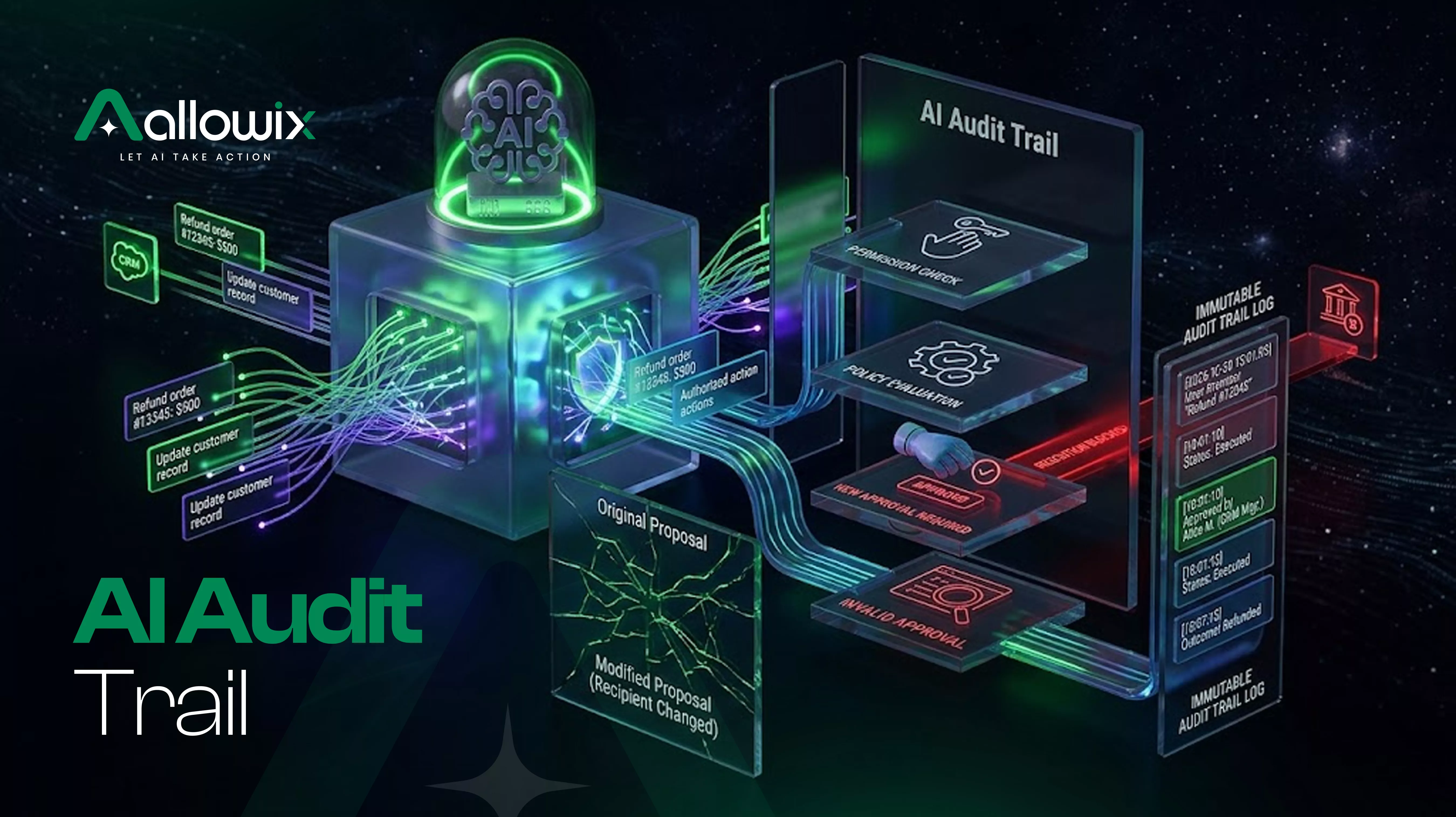
An AI agent updates a customer record, prepares a refund, or sends a message. The task is complete. But when someone asks who approved that action, the activity log only shows which AI model was running.
Would you consider that enough?
As AI agents become part of everyday business workflows, companies need more than a record showing that an AI system was active. They need to understand what the agent attempted, which permissions allowed it to proceed, whether a person approved the action, and what happened afterward.
That is where an AI audit trail becomes important.
Whether you're a business owner trying to keep track of AI activity or a technical leader building AI-powered workflows, the goal is the same: make every important AI action traceable and accountable.
In this guide, we'll explore what an AI audit trail should include, why recording the model name isn't enough, and how human approval can make AI actions easier to govern.
Contents
What is an AI audit trail?
An AI audit trail is a structured record of an AI agent's activity. It helps businesses understand what an agent did, which systems it interacted with, what permissions it used, and whether a human approved an important action.
Think of it as an activity history for your AI agents.
For example, imagine an AI agent working inside a customer management system. A customer requests a refund, and the agent reviews the request before preparing the transaction.
A useful audit trail should help answer:
- Which AI agent handled the request?
- What action did it propose?
- Which customer record or business context was involved?
- Did the action pass the required permission and policy checks?
- Who approved or rejected the proposal?
- When was the decision made?
- Was the action completed, refused, or rolled back?
Without these details, a business may know that an AI agent ran but still struggle to explain what it was authorized to do.
Why AI action logs need more than a model name
Most people don't care which model version processed a routine request. They care about what happened to their business data.
A model name can help technical teams investigate an AI execution, but it does not establish who authorized a business action.
Consider this example:
An AI agent prepares a $500 customer refund. A manager reviews the proposal and approves it. Before execution, the refund amount changes to $800.
Should the original approval still count?
No. The manager approved a specific proposal, not every possible version of it.
This is why an effective AI agent audit trail should connect the approval to the exact action that was reviewed. If the amount, recipient, destination, or other meaningful details change, the system should require a fresh decision. See also: why a changed proposal needs new approval.
An approval should follow the proposal it belongs to, not the agent that created it.
What should an AI agent audit trail record?
A useful AI activity log should help someone reconstruct the important parts of an action without exposing unnecessary business or customer information.
Here are the key records to consider:
| Audit field | What it should explain |
|---|---|
| Agent identity | Which AI agent performed the task |
| Initiating actor | Which user or process started it |
| Action details | What the agent proposed to do |
| Proposal version | Which exact version was presented for approval |
| Permission check | Whether the agent had the required access |
| Policy decision | Which rule allowed or blocked the action |
| Human approver | Who approved or rejected the proposal |
| Decision timestamp | When the approval or rejection happened |
| Execution status | Whether the action ran, failed, or was refused |
| Final outcome | What changed as a result |
For sensitive information, records should use appropriate references and identifiers instead of unnecessarily copying full customer or business data into the log.
The purpose is not to collect as much information as possible. It is to preserve enough reliable evidence to understand what happened. Related: how to add an AI agent audit trail without rebuilding your product.
Why human approval matters for AI agents
AI agents can do more than answer questions. Depending on their permissions and connected tools, they may update records, send messages, trigger workflows, or perform other business actions.
That creates an important distinction between allowing an agent to access information and allowing it to change something.
For example:
- Read: An agent checks a customer's order history.
- Prepare: It calculates a proposed refund.
- Request approval: It presents the amount and reason to an authorized person.
- Execute: The action proceeds only after the required approval.
- Record: The decision and outcome are added to the audit trail.
Not every action needs a person to approve it. Routine, low-risk activities may be automated within their permitted boundaries. More consequential actions should have an approval requirement based on the business rules.
The important part is making that distinction before the agent acts.
A notification saying an action is about to happen is not the same as an approval. The system needs to capture an actual decision from an authorized person. See our checklist for human in the loop AI agents.
How to connect AI permissions, approval, and audit logs
An audit trail is only useful when it reflects the controls that were applied before an action happened.
A practical governance approach connects four checks:
1. Permission
Does the AI agent have access to the system, information, and action it is requesting?
2. Policy
Does the proposed action follow the business rules? For example, an agent may be allowed to prepare a refund but not exceed a defined limit.
3. Approval
Does this particular action require a human decision? If so, has an authorized person approved the exact proposal?
4. Audit
Can the business later establish what was requested, which checks were applied, who made the decision, and what happened?
These checks should work together:
Permission ∩ Policy ∩ Approval ∩ Audit
If an action fails a required check, it should not proceed.
This approach makes AI write access easier to control and gives teams a clearer way to investigate actions afterward. Related: how to control what AI agents can access and do.
How Allowix approaches governed AI actions
Allowix is designed to bring governed AI agents into the business software companies already use.
Instead of treating AI access as an unrestricted connection, Allowix provides a gate around agent actions. That gate brings together permission, policy, approval, and audit checks.
When an agent prepares an action, the relevant controls determine whether it can proceed or needs human approval.
The important distinction is that the agent does not get to decide its own authority.
A person can review the proposed action, make the approval decision when required, and retain a record of the outcome.
This gives businesses a way to move beyond AI that simply provides recommendations toward AI agents that can participate in real workflows with defined controls.
Conclusion: Can you prove who approved the AI action?
As businesses introduce AI agents into customer support, finance, operations, and other workflows, accountability becomes just as important as automation.
A useful AI audit trail should do more than show which model ran. It should connect the agent, the proposed action, the permissions, the human decision, and the final outcome.
Before allowing your next AI agent to update a record, send a message, or trigger a business action, ask yourself:
If someone questions this action tomorrow, can you show exactly what happened and who approved it?
Because AI automation is only as accountable as the controls behind it.
Frequently Asked Questions
What is an AI audit trail?
An AI audit trail is a structured record of AI agent activity. It helps businesses track which agent performed an action, what it attempted, which controls were applied, whether a person approved it, and what happened afterward.
What should AI action logs include?
AI action logs should include agent identity, the initiating user or process, action details, permission and policy checks, approval decisions, timestamps, execution status, and the final outcome.
Why do AI agents need human approval?
Human approval is important when an AI agent proposes an action that could have significant business consequences. It allows an authorized person to review the exact proposal before the system executes it.
What is the difference between an AI activity log and an AI audit trail?
An AI activity log may show individual events, such as model calls or tool usage. An AI audit trail connects those events with identity, authorization, approval, and outcomes so that a reviewer can understand what happened.
How can businesses control AI agent write access?
Businesses can define which systems and actions an agent may access, apply policies to proposed changes, require human approval for selected actions, and record the decisions and outcomes in an audit trail.
See governed agents in your own product.
Book a demo and we'll walk your team through the governance model, the two-seam integration, and a use case for your industry.