AI Agent Governance: Match AI Guardrails to Each Agent’s Autonomy Level
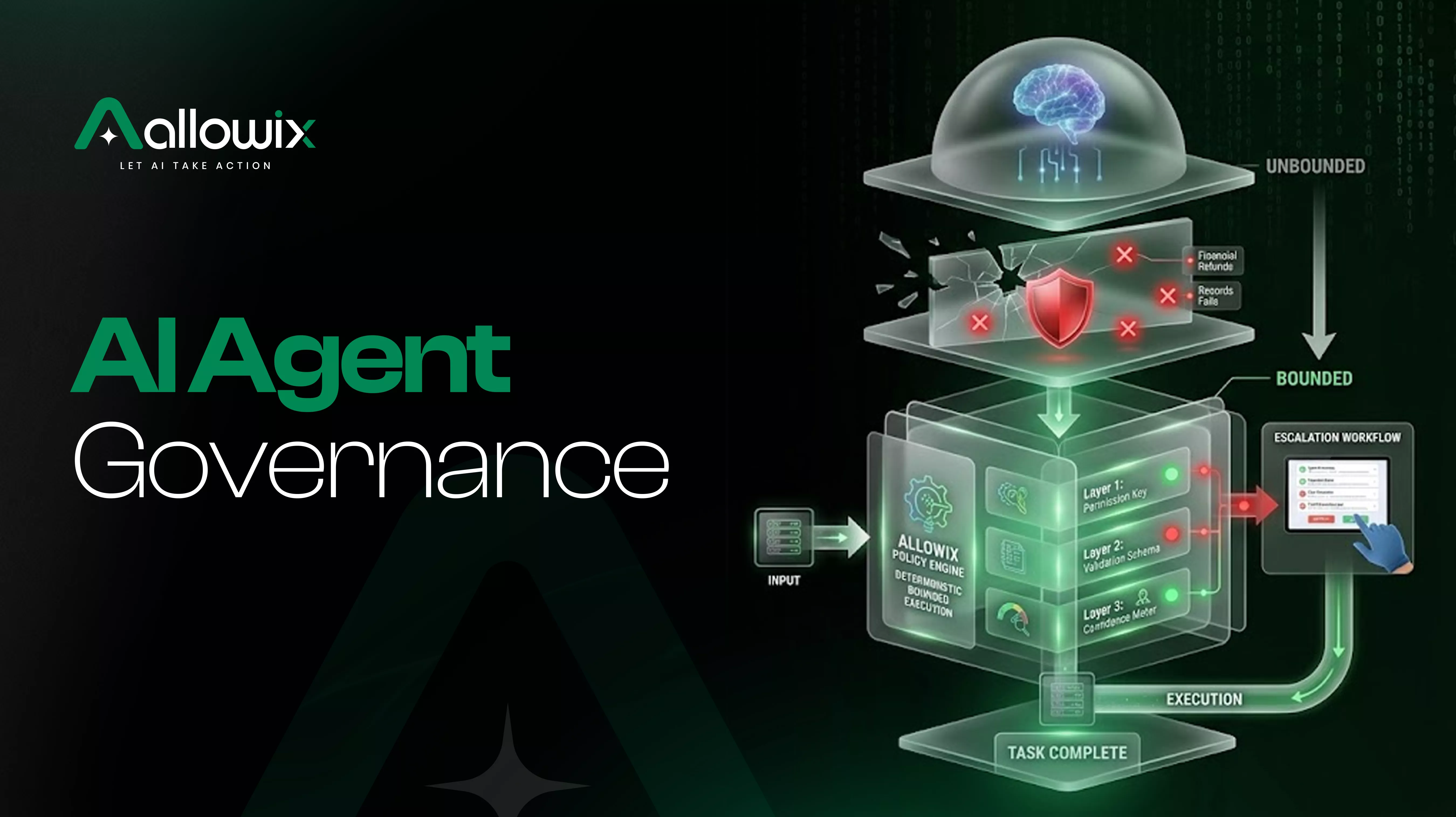
Imagine your company has three AI agents. One summarizes reports. Another recommends which customer to contact next. The third can send emails, update records, and process refunds. Would you give all three the same permissions and approval process?
Probably not. Yet that is exactly what can happen when businesses use one AI governance policy for every agent, regardless of what it can actually do.
AI agent governance is about deciding what each agent can access, which actions it can take, who is responsible for it, and how its actions can be reviewed.
For business leaders, the concern is straightforward: how do you let AI do useful work without giving it more freedom than the task requires?
For developers and platform teams, the challenge is more specific: how do you translate those decisions into AI guardrails, permissions, approval rules, and audit records that are enforced when an agent acts?
The answer is not to make every agent more restricted. It is to match the level of control to the agent’s level of autonomy.
In May 2026, Gartner warned that applying uniform governance across AI agents can lead either to unnecessary restrictions on simple agents or insufficient controls on more autonomous ones. Its recommendation was to use a proportional approach based on autonomy and risk.
This guide explains what AI agent governance means, how to manage AI agents across four autonomy levels, which guardrails to apply at each level, and how to adjust an agent’s authority without abandoning the entire pilot.
Contents
- Key takeaways
- What is AI agent governance?
- Why one framework does not fit every agent
- Four autonomy levels
- AI guardrails checklist by level
- A practical governance workshop
- How to reduce autonomy without abandoning the pilot
- Agent registry and audit trail
- Where Allowix fits
- Frequently Asked Questions
- Conclusion
Key takeaways
- AI agent governance should reflect what an agent can actually do, not simply which department owns it.
- A read-only assistant does not need the same controls as an agent that can send emails or move money.
- Human-in-the-loop AI means that a person reviews and approves the action when approval is required, before it happens.
- AI guardrails should cover data access, permitted actions, approvals, and audit records.
- When an agent becomes too risky, reduce its authority instead of automatically shutting down the entire workflow.
- Allowix provides a governed layer for actions within existing business software. Teams still need to define the agent’s intended scope and autonomy.
What is AI agent governance?
In simple terms, AI governance defines who is responsible for AI, what it is allowed to do, and how its behavior is controlled and reviewed.
AI agent governance applies those decisions to software that can do more than generate an answer. An AI agent may retrieve information, call tools, update a record, or carry out a sequence of actions toward a goal.
That creates a practical difference.
A chatbot that gives a poor answer can mislead someone. An agent connected to business tools might also send the wrong email, change a customer record, or trigger an action that costs money. Related: AI agent vs chatbot.
So, when asking what AI governance means for agents, start with five questions:
- Who owns this agent?
- What information can it access?
- Which actions can it perform?
- When must a person approve an action?
- How can we establish what happened afterward?
These questions turn an AI governance framework from a document that describes intentions into rules a team can actually use. See also: an AI agent governance framework that fits on one page.
Why one AI governance framework does not fit every agent
A single company-wide policy can establish common principles. The problem starts when every agent inherits exactly the same operational controls, regardless of its capabilities.
Consider two examples.
Agent A: Report assistant
It reads approved sales data and summarizes weekly performance. It cannot update the source records or contact customers.
Agent B: Customer operations agent
It reads customer records, updates orders, sends emails, and may initiate refunds under defined conditions.
Both agents need appropriate access controls and review. But the consequences of their actions are different.
If Agent A must wait for the same approvals as Agent B for every summary, the team creates unnecessary friction.
If Agent B receives only a generic approval because it passed the same checklist as Agent A, important risks may go unaddressed.
This is the problem with treating AI governance as a one-size-fits-all exercise.
The better approach is proportional governance: apply controls according to what the agent can do, what could go wrong, and how much independence it has.
How to manage AI agents: four autonomy levels
A practical AI governance framework can classify agents into four levels. These are useful working categories; organizations should define them consistently with their own policies and risk requirements.
| Autonomy level | What the agent can do | Typical controls |
|---|---|---|
| 1. Observe | Read approved information, summarize, and draft internally | Limited data access, authentication, logging |
| 2. Advise | Recommend actions or prepare drafts for a person to review | Read-only access, source checks, human review of recommendations |
| 3. Act with approval | Prepare and execute changes after explicit approval | Action-level permissions, approval workflow, audit trail |
| 4. Act autonomously | Execute permitted actions within defined limits | Strict policies, spending or action limits, monitoring, clear stop conditions |
Level 1: Observe
At this level, an agent can retrieve and summarize information but cannot make changes that persist in business systems.
For example, a sales team might use an agent to summarize recent customer activity before a meeting.
The main concerns are whether the agent can access the right information, whether sensitive data is appropriately restricted, and whether its output is reliable enough for the intended use.
Start with the minimum data access needed for the task. Read-only does not mean risk-free, especially when the information is confidential.
Level 2: Advise
An advising agent can recommend a next step or prepare work for a person to review.
For example, it might identify a customer who needs follow-up and draft an email explaining why.
The agent provides a recommendation, but a person decides whether to act on it. The agent should not have write access that allows it to bypass that boundary.
Useful AI guardrails at this level include clear source references, output-quality checks, and a defined distinction between preparing an action and executing it.
Level 3: Act with approval
At this level, the agent can prepare a change and carry it out only after the required person explicitly approves it.
Imagine a customer support agent that reviews an order, determines that a refund may be appropriate, and prepares the refund request.
The agent can do the preparation. The designated approver makes the decision before the refund is processed.
This is where human-in-the-loop AI becomes especially important.
Approval should be tied to the specific action being authorized. A general message saying that a project is approved should not automatically authorize every future action by the agent.
The system should also enforce the decision. If approval is required and has not been granted, the action must not proceed.
Level 4: Act autonomously
An autonomous agent can execute specific actions without asking a person to approve each individual step.
That does not mean it should have unlimited authority.
For example, an agent might automatically categorize incoming support requests or update a low-risk internal status when the relevant conditions are met.
Its permissions should remain narrow, and the workflow should define action limits, failure conditions, and when the agent must stop or escalate.
Autonomy should be earned through testing and evidence, not granted because a demonstration looked impressive.
If a team cannot clearly explain an agent’s authority, ownership, and stop conditions, it should resolve those questions before expanding its autonomy.
AI guardrails checklist by autonomy level
Once you have assigned an autonomy level, translate it into controls the team can verify.
For observe-level agents
- List the approved data sources and records.
- Restrict access to information needed for the task.
- Log relevant access and activity.
- Test the quality of summaries and retrieval.
- Confirm that the agent cannot change source records.
For advise-level agents
- Keep write actions disabled unless separately authorized.
- Require evidence or source references where appropriate.
- Make recommendations distinguishable from completed actions.
- Define who reviews the recommendation and how it is used.
- Test how the agent responds when information is missing or uncertain.
For act-with-approval agents
- Define which actions require approval.
- Name the people or roles authorized to approve them.
- Show the exact action and relevant details before approval.
- Prevent execution until the required approval is recorded.
- Record the decision and the action’s outcome.
For autonomous agents
- Limit actions to a defined scope.
- Set appropriate transaction, spending, or activity limits.
- Prevent uncontrolled retries and repeated action loops.
- Define conditions that stop execution or trigger escalation.
- Review activity and reassess permissions as the workflow changes.
Across all four levels, five questions should have clear answers:
- Records: Which data can the agent access?
- Actions: Can it read, draft, update, send, or delete?
- Approval: Who must approve an action, and what happens if approval is unavailable?
- Audit: What information is needed to reconstruct the decision and outcome?
- Step-down: How can the team reduce the agent’s authority quickly if a problem appears?
These are practical starting points, not a substitute for the legal, security, or industry-specific requirements that apply to your business. Related: AI agent security.
A practical AI governance workshop your team can run in one morning
You do not need to begin by purchasing another dashboard or writing a lengthy policy document.
Bring together someone from product, security, and the team that will use the agent. Then create a simple inventory of the agents currently being built or tested.
For each agent, fill in the following:
| Question | Example |
|---|---|
| What is its purpose? | Prepare customer follow-up emails |
| Who owns it? | Sales operations lead |
| What can it read? | Assigned leads and approved interaction history |
| What can it change? | Create a draft, but not send automatically |
| What needs approval? | Sending an external email |
| How is activity reviewed? | Action records and periodic review |
| What happens if something goes wrong? | Disable sending and return to draft-only mode |
Then ask the team one question:
If this agent made a mistake at 4 p.m. on a busy Tuesday, what is the worst realistic outcome?
Use the answer to review the agent’s autonomy level and controls. Related: who is responsible when AI makes a mistake.
If the agent only prepares a draft, the risk is different from an agent that can send messages to thousands of customers. If two stakeholders disagree about the appropriate level, keep the narrower authority until the decision is resolved.
The purpose is not to eliminate every possible risk. It is to make the agent’s authority explicit before that authority expands.
How to reduce an AI agent’s autonomy without abandoning the pilot
Sometimes an agent works well at first, then a new workflow, permission, or failure reveals a risk the original design did not anticipate.
The answer does not always have to be shutting the whole project down.
Imagine an agent that looks up orders and processes refunds. The team discovers that refunds need closer review than expected.
Instead of disabling everything, it can:
- Keep order lookup available.
- Require approval before processing refunds.
- Narrow the conditions under which refunds can be requested.
- Review the action records before restoring broader permissions.
The agent remains useful, but its authority changes.
Teams should define step-down conditions in advance. Examples include repeated failed checks, an unexpected action, a change in the workflow, or a new risk identified during review.
When the agent’s permissions change, update its registry and operational documentation as well. A policy that describes yesterday’s permissions is not a reliable account of what the agent can do today.
Reducing autonomy is a control decision, not necessarily a failed AI project.
AI agent registry and audit trail: what should you track?
As the number of AI agents grows, teams need a reliable way to answer basic questions about each one.
Which agents are active? Who owns them? What can they access? What level of autonomy have they been assigned? What happened when they last took action?
An AI agent registry can record information such as:
- Agent name and business purpose.
- Responsible owner.
- Connected systems and approved data.
- Permitted actions and autonomy level.
- Required approval rules.
- Current status and review date.
An audit trail provides a different kind of evidence. It helps a team reconstruct relevant events, including what action was requested, which controls were checked, whether approval was granted, and what outcome followed. See how to add an AI agent audit trail.
The registry describes the agent and its intended authority. The audit trail helps explain what happened during execution.
Both matter when a business needs to investigate an unexpected action or review whether the agent still has the right level of access.
Keep records proportionate to the workflow and avoid collecting unnecessary sensitive information.
Where Allowix fits into AI agent governance
Defining an autonomy level is a decision your team makes. Enforcing the rules when an agent attempts to act is a separate challenge.
Allowix is a governed AI layer from Solvefy designed to connect AI agents with existing business software and control actions through defined checks.
Its governance approach brings together four requirements:
- Permission: Is the agent authorized to access the relevant resource or perform the action?
- Policy: Does the action comply with the applicable rules?
- Approval: Has the required person approved the action?
- Audit: Can the decision and outcome be reviewed?
These requirements serve different purposes. An agent might have access to a tool but still be prohibited from performing a particular action. And when approval is required, the action should remain blocked until that approval is granted.
Allowix does not decide your organization's entire governance policy or replace the host application's identity and authorization model. Teams still need to define the agent’s intended role, permissions, and autonomy level. Related: how to give an AI agent an identity.
The goal is to make those decisions enforceable in the business software people already use, rather than treating access and action as the same thing.
Frequently Asked Questions
What is AI agent governance?
AI agent governance is the process of defining what AI agents can access and do, who is responsible for them, when human approval is required, and how their actions are reviewed.
How do you manage AI agents safely?
Start by assigning each agent an owner and a clear purpose. Limit its data access and available actions, choose an appropriate autonomy level, define approval requirements, and keep records of important activity. Reassess the controls when the agent’s role changes.
What are AI guardrails?
AI guardrails are rules and technical controls that constrain how an AI system behaves. For agents, they can cover data access, tool use, permitted actions, approval requirements, spending limits, and conditions that stop execution.
What are the four AI agent autonomy levels?
A practical model uses Observe, Advise, Act With Approval, and Act Autonomously. These levels distinguish agents that only retrieve information from those that recommend actions, execute approved changes, or operate independently within defined limits.
What does human-in-the-loop AI mean?
Human-in-the-loop AI involves a person reviewing, deciding, or approving selected steps in an AI workflow. For an action that requires approval, the person must approve it before execution, not merely receive a notification afterward.
Does every AI agent need human approval?
No. The level of oversight should depend on the task, its consequences, and the organization's requirements. A low-risk read-only task may not need approval for each request, while a refund or destructive action may require a stricter control.
Is an AI governance framework only for large enterprises?
No. Small teams also need to know which agents are active, who owns them, what they can do, and how to stop an unexpected action. A simple inventory and a clear set of rules can be a useful starting point.
What is the difference between AI governance and AI agent governance?
AI governance covers the broader management of AI systems, including accountability, policy, risk, and oversight. AI agent governance applies those principles to agents that can use tools and take actions, with particular attention to permissions, autonomy, approvals, and execution records.
Does the EU AI Act determine an AI agent’s autonomy level?
The EU AI Act includes obligations that depend on the system, its use, and the applicable provisions. The four autonomy levels in this article are a practical operational framework, not official EU AI Act classifications. Organizations should assess applicable legal obligations separately.
Do AI agents need an audit trail?
For business workflows where actions affect records, customers, money, or access, an audit trail is important for investigation and accountability. The level of detail should reflect the risk, while avoiding unnecessary collection of sensitive data.
Conclusion: AI guardrails should match what an agent can do
A report summarizer and an agent that can issue refunds should not automatically inherit the same operational controls.
One may need limited read access and activity logging. The other may need narrow permissions, explicit approval rules, action limits, and stronger review.
Start by identifying what each agent can read, what it can change, who owns it, and how its actions can be stopped or reviewed. Then match the controls to the authority you are giving it.
As your evidence and confidence grow, you can expand that authority deliberately. If the risk changes, you can narrow it again.
Think about the last AI agent your team tested: did you choose its autonomy level and guardrails deliberately, or did its permissions grow as the demo became more impressive?
See governed agents in your own product.
Book a demo and we'll walk your team through the governance model, the two-seam integration, and a use case for your industry.